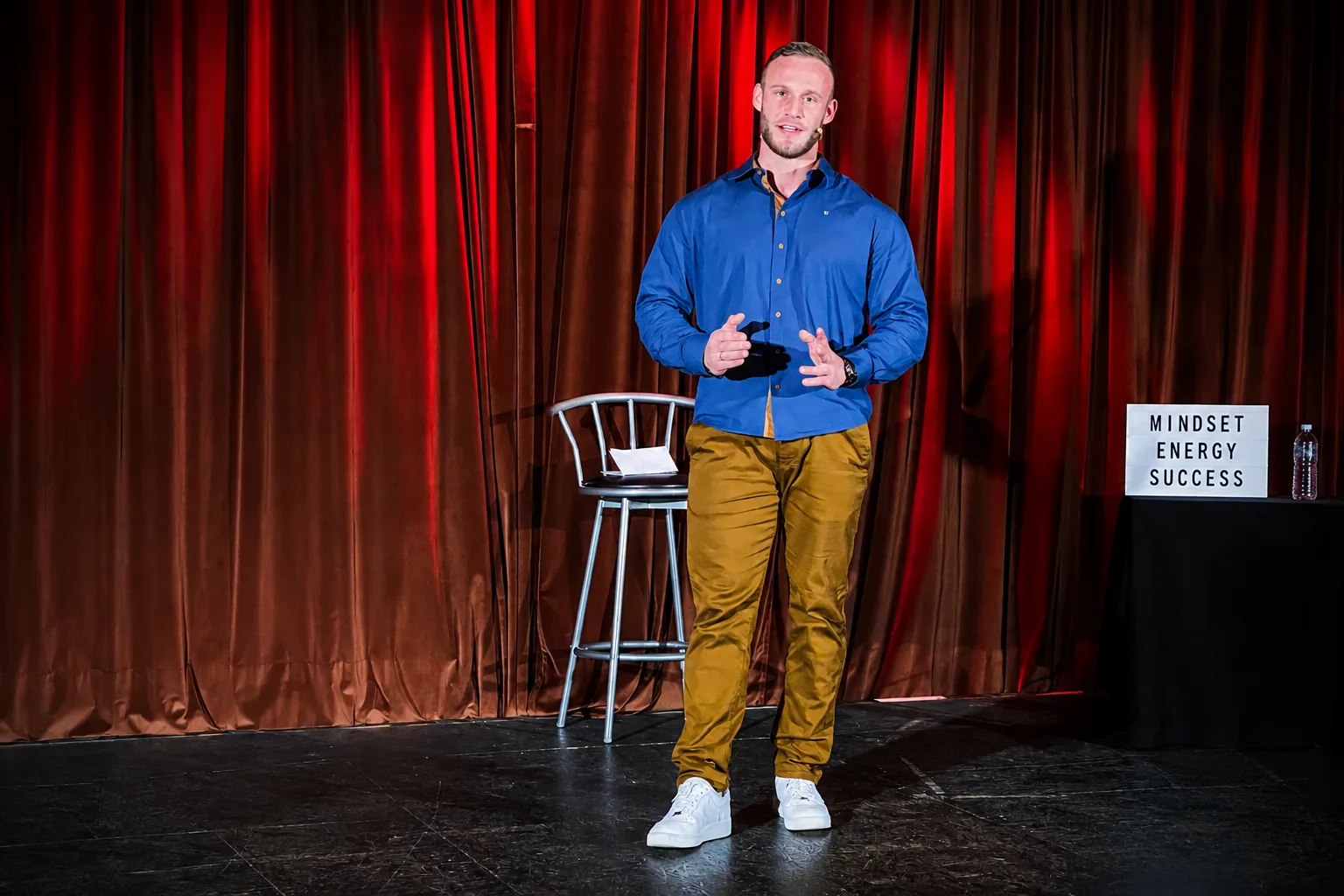
Dominik Dörfl speaking on stage in front of a red curtain

Keynote · talk · stage · Nuremberg

Keynote speaker
in Nuremberg.

Talks on performance, health and change from someone who knows both: competition on stage and responsibility in a business.

Almost 100 events hosted, a career as a professional athlete and daily work with people and teams produce a talk that holds rather than merely motivates.

almost 100
events hosted
German champion
Nuremberg
and the metropolitan region

Why this talk

A speaker who has run the course himself.

Performance, setbacks and the limits of what you can carry are more credible from someone who has met them in competition, in coaching and in their own business.

  • 01 / 04

    Lived practice

    Experience, not theory slides

    The material comes from his own path as a professional athlete, coach and entrepreneur. An audience quickly senses whether someone is talking about performance or has been through it.

    • Two-time German champion in competitive sport
    • A coach working on real cases every day
    • An entrepreneur carrying his own responsibility
  • 02 / 04

    Assurance on stage

    Almost 100 events on stage

    Hosting business, sports and stage formats builds the routine for timing, guiding an audience, and staying calm when something goes wrong live.

    • Hosting business and sports formats
    • Timing, audience handling, a steady hand when things slip
    • Talk and hosting available from one person
  • 03 / 04

    Connection

    Cut to your subject

    We establish beforehand who is in the room and what should be different afterwards. The keynote is cut to that rather than delivered off the shelf.

    • A preliminary conversation on occasion, audience and goal
    • Examples from the audience's own line of work
    • Length from a short input to a full keynote
  • 04 / 04

    What lasts afterwards

    Next steps people can take away

    Instead of a short-lived lift, people keep concrete starting points they can actually use on their next working day.

    • Tools such as the Middle Road
    • The Four Pots rule for your own life
    • A follow-on through a health day or corporate fitness

Tools from the talk

Two images that stay with you.

A talk works when something of it survives to the next working day. So every audience gets tools they can remember without notes. Two of them are a fixed part of almost every keynote.

The Middle Road

Staying on course when turning off sounds perfectly reasonable.

On the way to any goal everyone gets tested: do I really want to stay on this road, or shall I turn off just this once? The image shows where the junctions are, why they look so tempting in the moment, and how to find your way back after a detour.

  • Spotting the turnings before you take them
  • Making decisions deliberately rather than in passing
  • Getting back on track after a detour
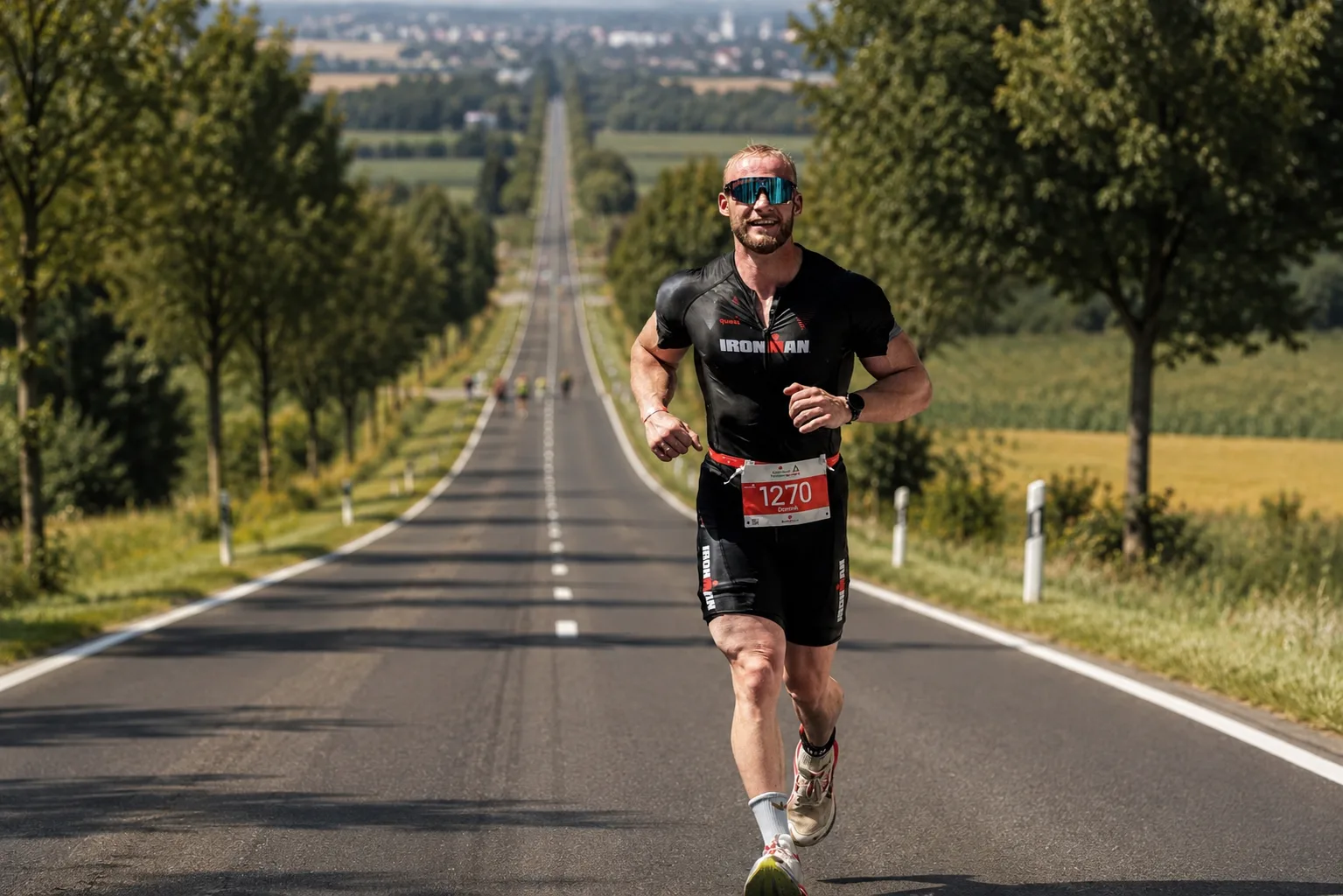
Dominik Dörfl running on a dead straight country road during an Ironman race
The Middle Road, taken literally: an Ironman run course.

The Four Pots rule

Balance is not a mood, it is a decision.

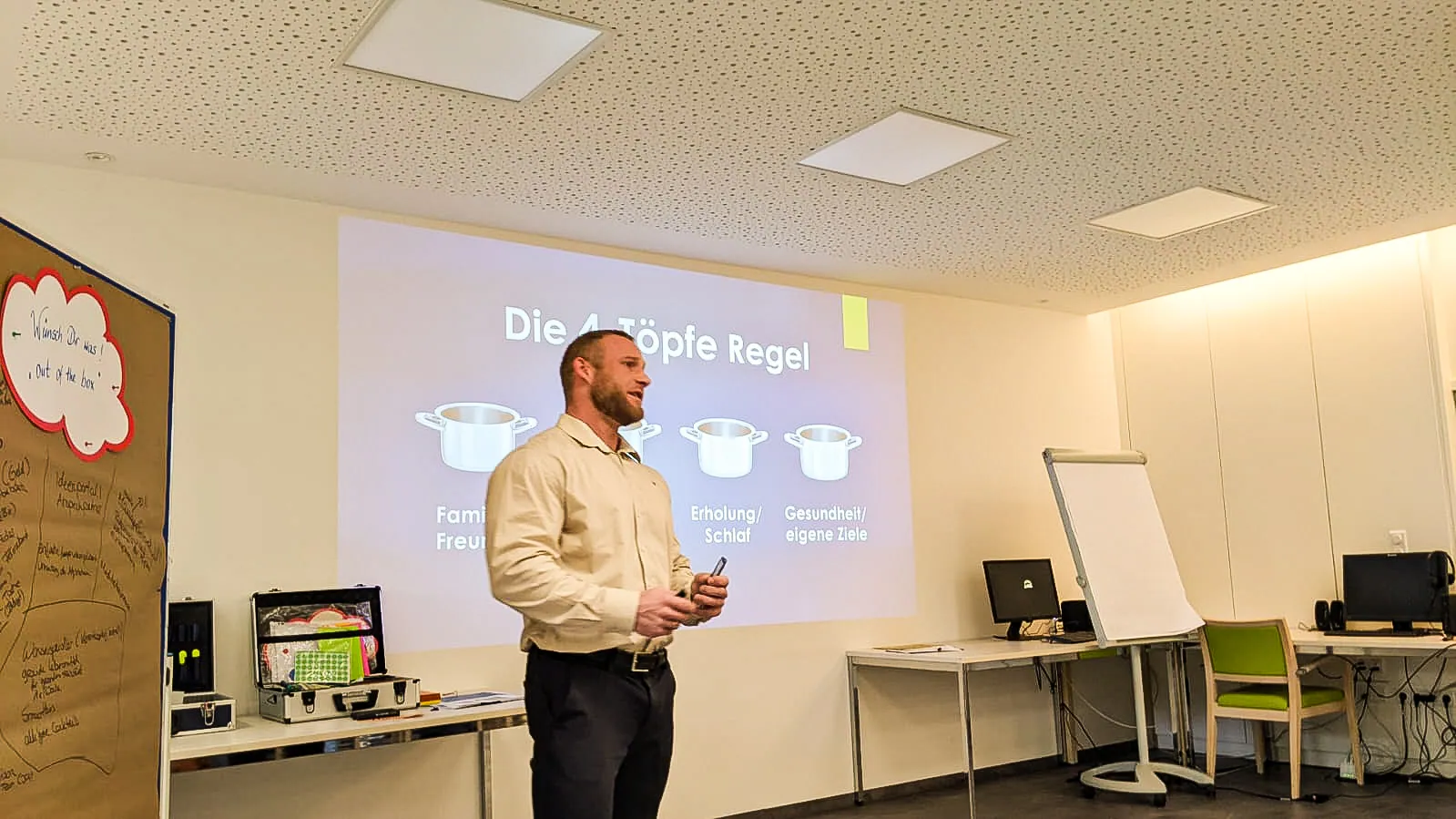
We all need balance to feel well, and yet we tend to neglect things until they catch up with us. The Four Pots rule starts exactly there: in seconds it shows which pot is running dry, and helps you make the next decision accordingly.

  • Family & friends
  • Work & career
  • Rest & sleep
  • Health & your own goals
Dominik Dörfl explaining the Four Pots rule during a talk, in front of a slide showing four pots
The Four Pots rule live in the talk.

Topics

Three themes that land inside a company.

The themes can be booked individually or combined. What matters is what your audience should do differently afterwards.

  1. Performing under pressure

    How competitive sport handles load, setbacks and expectation, and what of that transfers to leadership, projects and working life.

    In competition it is rarely the best day that decides things, but how you handle the bad one. Using real situations from race preparation and racing, the talk shows how load can be planned, why setbacks belong in the plan, and how to tell whether a structure holds or merely looks good. All of it is carried across to what your audience knows: projects against deadlines, leading through unsettled phases, decisions made on incomplete information.

    What your audience takes away

    • Spotting peaks in load before they become permanent
    • Treating setbacks as part of the plan, not as an accident
    • How to tell you are fighting in the wrong place
  2. Health as a business factor

    Why physical capability is not a private side issue, but directly affects concentration, absence and how much a team can carry.

    Companies like to treat health as a private matter, and it still turns up in every figure: in days lost, in concentration after lunch, in who can still carry a demanding phase. The talk makes that connection visible without wagging a finger, and without pretending a talk replaces a programme. It creates the willingness that a health day or a corporate fitness offer needs in order to land at all.

    What your audience takes away

    • The link between recovery and the quality of decisions
    • Why programmes fail when the attitude behind them is missing
    • What leaders have to model for any of it to work
  3. Discipline that holds

    What motivation actually delivers, where it reliably fails, and which structures carry change over months rather than a fortnight.

    Motivation is a good starter and a poor engine. Rely on it and you stop again in February. The talk separates the two cleanly: what motivation can do, where it predictably collapses, and which structures make the difference once the first enthusiasm is gone. This is where the two tools interlock, the Middle Road for the course and the Four Pots rule for the balance.

    What your audience takes away

    • The difference between a resolution and a structure that holds
    • Why small steps win and grand resolutions fail
    • How to pick up again after a lapse instead of giving up
Dominik Dörfl with a microphone during a talk
Topics that land where the work happens.

Formats

From a short input to a full day on stage.

Depending on the occasion, a short input talk may be enough, or you need the keynote as the substantive high point of the event. Both are possible, including alongside hosting.

Short format

input talk

A shorter format for health days, team events or leadership groups, when the aim is one clear prompt to think.

30 to 60 minutes

keynote

The classic talk as the substantive high point of a conference, client event or internal meeting.

A full day on stage

Keynote and hosting combined

Talk and hosting from one person: a substantive opening, then guiding the audience through the day's programme.

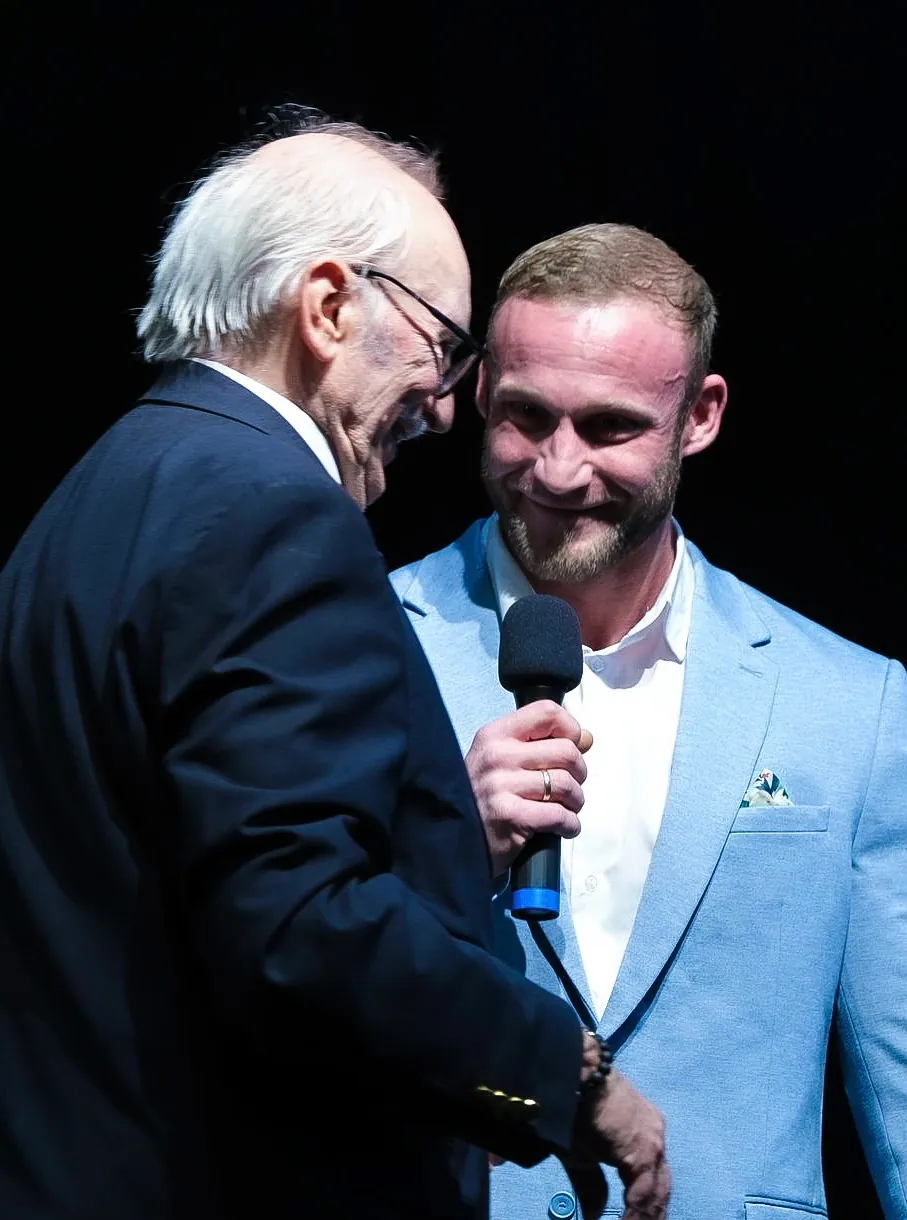
Dominik Dörfl conducting a stage interview with a microphone at an evening event
On stage: talk, interview and hosting from one person.

Occasions

What the talk gets booked for.

People rarely look for a keynote by topic, but for a specific date. These five occasions come up most often, and each one is tailored quite differently.

Conference and year opener

The high point that ties together a day of figures and presentations and gives the programme a common thread.

Leadership group

For smaller groups dealing with workload, setting an example and their own stance, with room for discussion rather than just a talk.

Health day

The morning input that frames the day and explains why what follows makes any difference at all.

Anniversary and ceremony

A talk tied to the occasion that suits a formal setting and still leaves something solid behind.

Internal conference

For teams in the middle of change: an outside view that says what everyone inside can feel, and points a way forward.

How it runs

How your talk comes together.

From the first enquiry to the follow-on after the event, the path stays short, personal and aimed at your goal.

01

Clarify occasion and audience

The preliminary conversation covers the occasion, who is in the room, the length and the message that should stick.

02

Tailor the content

Topics, examples and language are matched to the audience, so the talk belongs to your event rather than sitting beside it.

03

The appearance itself

The talk is delivered with presence, timing and a sure hand with the audience, with a question round or panel afterwards if you want one.

04

Secure the follow-on

If you want, the next step follows: a health day, corporate fitness or an accompanying programme, so the impulse does not end with the keynote.

FAQ

Common questions about the keynote in Nuremberg.

The essentials on topics, length, region, formats and how an enquiry runs.

What topics does the keynote cover?

The focus is on performing under pressure, health as a business factor, and discipline and change. The material comes from competitive sport, coaching and running a business, and is cut to the audience.

How long is a talk?

A keynote usually runs 30 to 60 minutes. Shorter talks are possible for health days or team formats. The length is agreed in the preliminary conversation.

Where do the talks take place?

The focus is Nuremberg, Fürth, Erlangen and the surrounding metropolitan region. Dates further afield can be arranged.

Can the keynote be combined with hosting?

Yes. Talk and hosting from one person is a common format: a substantive opening, then guiding the audience through interviews, panels and the rest of the programme.

What occasions does the talk suit?

Conferences, client events, leadership groups, health days, anniversaries and internal conferences where health, performance or change are on the agenda.

How does an enquiry work?

After your enquiry with the occasion, date, venue and audience, there is a short conversation to establish the fit. A concrete offer follows with format, length and running order.

What does a keynote cost?

There is no flat rate, because the preparation differs considerably from one occasion to the next. The fee depends on format and length, the work needed to tailor the content, travel and date, and whether hosting is included. After the preliminary conversation you get a concrete offer rather than a range.

How much lead time is needed?

Four to six weeks is comfortable, leaving enough time for the preliminary conversation and tailoring. Shorter notice is possible if the diary allows, with tighter preparation. Booking early mainly secures the date.

What technology is needed?

A headset or handheld microphone, and a projector if slides are used. The talk also works without slides. What your venue provides is checked in advance, so nothing has to be improvised on the day.

What group size makes a talk worthwhile?

There is no upper limit. At the lower end the format works well from about fifteen people. For smaller groups, a short input followed by discussion is usually more effective than a keynote from the stage.

How does this differ from a motivational talk?

In experience, motivation lasts a few days. So the focus here is not on mood but on structure people can transfer: tools such as the Middle Road and the Four Pots rule, which you can remember without notes and apply on your next working day.

May the talk be recorded?

Usually yes, if agreed in advance. How the recording may then be used, internally, on your intranet or publicly, is settled together before the camera rolls.

Keynote speaker in Nuremberg

Give your event something that stays.

Describe the occasion, date, venue and audience briefly. You will get an honest assessment of whether the talk fits, and in what format.